 Just in —
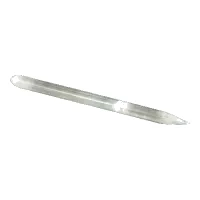
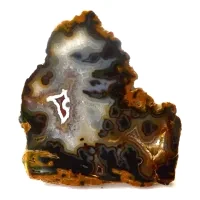

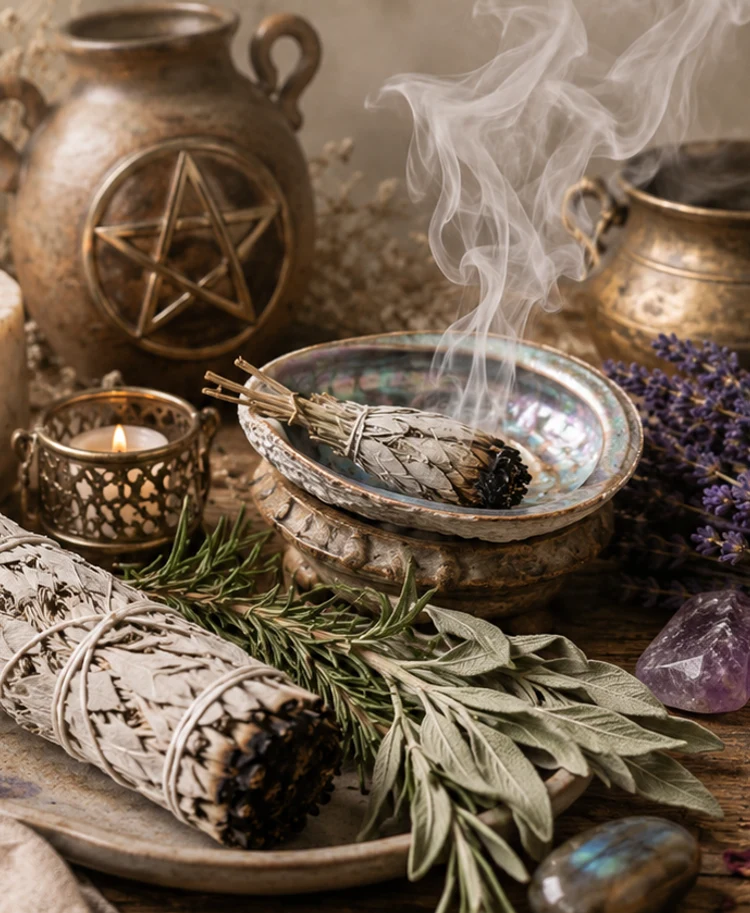
Burning dried plant material to scent and mark a space is about as widespread a human practice as exists — it turns up independently across Europe, Asia, Africa and the Americas. But the two products the shelf is stocked with, white sage and palo santo, both come with context attached, and it is worth having before you buy either.
White sage
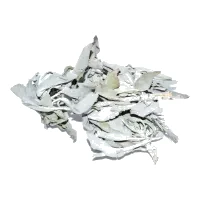
Salvia apiana grows in southern California and northern Baja. It is a sacred plant to a number of Indigenous peoples of that region, and its use in ceremony — including the practice often called smudging, which is a specific ceremonial form, not a synonym for burning herbs — belongs to those traditions.
Two things follow from that, and they are separate issues:
- Sourcing. The commercial boom has driven wild-harvesting on a scale the plant does not sustain, including poaching from public land and from land Indigenous communities gather on. Cultivated white sage — grown on a farm rather than stripped from a hillside — is widely available and does not carry that cost.
- Language and practice. Many Native people have asked, publicly and repeatedly, that non-Native users not describe what they are doing as smudging, and that closed ceremonial forms not be imitated. Burning a bundle of dried herbs to freshen a room is not the same act as a ceremony, and calling it what it is costs nothing.
None of this is an argument that you may not burn sage. It is an argument for knowing where yours came from and what you are calling it.
Palo santo
Bursera graveolens — "holy wood" — grows in the dry forests of Peru, Ecuador and neighbouring countries, and is used in Andean and Amazonian traditions. Its particular quality is that the aromatic resin only develops after the tree has died and lain on the forest floor for several years. Wood cut from a living tree does not have it, and does not smell the way palo santo is supposed to.
The species is not currently listed as endangered, but the dry forest it grows in is one of the most threatened habitats in South America, and harvest is regulated in its range countries. Legitimately sourced palo santo is naturally fallen and certified; the incentive to cut living trees to meet demand is real. Buying from suppliers who can say where the wood came from is the whole of the ask.
Alternatives with their own long histories
If either of the above sits uneasily, the tradition of aromatic smoke is far wider than two products:
- Rosemary — burned in European households for centuries, and one of the oldest cleansing herbs on the continent.
- Common garden sage (Salvia officinalis) — a different plant from white sage, unencumbered, and growable in a pot on a windowsill.
- Cedar and juniper — used across northern Europe and Asia; juniper is central to Tibetan practice.
- Mugwort — long-standing in both European and East Asian traditions.
- Lavender — gentle, and pleasant to anyone who finds sage smoke harsh.
- Frankincense, myrrh and copal — resins with thousands of years of ceremonial use across the Mediterranean, Arabia and Mesoamerica.
Before you light a bundle
A smouldering bundle is an open ember that you then carry around the house. That is what makes it different from a candle, which at least stays where you put it. Very nearly every incident with smoke cleansing comes down to one of two things: an ember that fell somewhere nobody looked, or a bundle everyone assumed was out.
- It sheds embers the whole time it is lit. Keep a heatproof dish underneath it from the moment you light it to the moment it is out, and move the dish with the bundle rather than leaving it behind on the table. Embers land where you are not looking, and on a rug or a carpet one can sit and work quietly for a long time before there is anything to see.
- It does not go out on its own. Press the lit end firmly into sand or ash. A bundle left in a dish to "burn out" will smoulder far longer than seems possible, and that is the state most house fires from this practice begin in.
- Check it twice, and again later. Feel the dish as well as the bundle. The most common cause of an incident is a bundle everyone was sure had gone out.
- An abalone shell is not a heatproof dish. It is traditional in some Indigenous practice specifically as the water element of a ceremony, and it is beautiful, but direct ember contact scorches it and in time cracks it. Line it with sand if you use one.
- The rest of the bundle is the most flammable thing you own. Dried, loose-leaved and made to catch. Keep your spares at the other end of the room from the one that is lit, not in the same dish.
- Ventilate, and clear the room of anyone it will trouble. Birds should be out of the room entirely, being markedly sensitive to airborne smoke, and take care around asthma or any respiratory condition. If the air has gone hazy you have used far more than you need.
None of this is fussiness. This is the only thing on the shelf that you deliberately set alight and then walk around your home holding.
How to burn a bundle
- Open a window first. The smoke needs somewhere to go, and in most traditions carrying it out is the point of the exercise.
- Light the tip, let it catch for 20 to 30 seconds, then blow the flame out. You want an ember, not a fire.
- Pick up the dish before you pick up the bundle, and keep it underneath you as you walk.
- Move through the space slowly. It should scent a room, not fill it.
- Press the lit end into sand or ash to put it out.
- Check it twice.
Shop the guide
What is covered above: